
Introduction
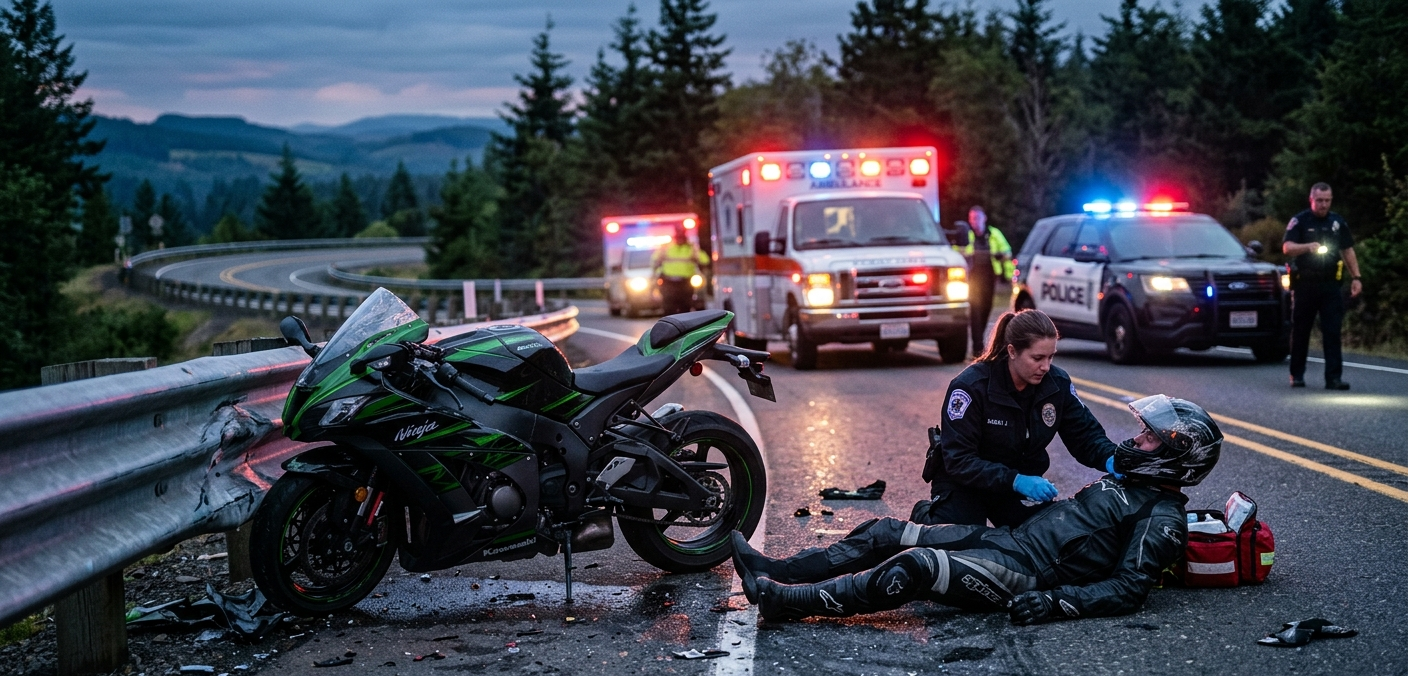
Motorcyclists are among the most vulnerable people on American roads. Unlike drivers of passenger vehicles who are surrounded by thousands of pounds of steel, airbags, seatbelts, and crumple zones designed to absorb the energy of a collision, motorcycle riders have virtually no protective barrier between themselves and the road, other vehicles, and whatever they collide with in an accident. The consequences are often devastating.
According to the National Highway Traffic Safety Administration, motorcyclists are approximately 24 times more likely to die in a crash than occupants of passenger vehicles per mile traveled. The injuries that motorcycle accident survivors sustain are frequently catastrophic — traumatic brain injuries, spinal cord damage, severe road rash, multiple fractures, internal organ damage, limb amputations, and permanent disability are all tragically common outcomes of serious motorcycle crashes.
Beyond the physical devastation, motorcycle accident victims face another significant challenge — bias. Insurance companies, defense attorneys, and even some jurors hold deeply ingrained prejudices against motorcyclists, often assuming that riders are inherently reckless or that they were at least partially responsible for any accident they are involved in regardless of the actual facts. This bias can make it significantly more difficult for motorcycle accident victims to receive the fair compensation they deserve without an experienced advocate fighting aggressively on their behalf.
If you or someone you love has been injured in a motorcycle accident caused by another party’s negligence, hiring an experienced motorcycle accident attorney is one of the most important decisions you will make. This complete guide explains everything you need to know — why motorcycle accident cases require specialized legal expertise, what an attorney does for you, who may be liable for your injuries, what compensation you are entitled to receive, and how to find the right attorney for your case.
Why Motorcycle Accident Cases Require Specialized Legal Expertise
Not every personal injury attorney is equally well equipped to handle a serious motorcycle accident case. These cases present unique legal, evidentiary, and strategic challenges that require attorneys with specific experience and knowledge of motorcycle accident litigation.
The bias against motorcyclists that permeates the insurance industry and the general public is one of the most significant challenges in motorcycle accident cases. Insurance adjusters routinely assume that motorcyclists were speeding, weaving through traffic, or otherwise riding recklessly — even when the evidence clearly shows otherwise. They use this assumption to deny claims, reduce settlement offers, and shift blame onto the injured rider. An experienced motorcycle accident attorney knows how to anticipate this bias, counter it with evidence, and present your case in a way that overcomes prejudicial assumptions.
Motorcycle accident cases often involve complex accident reconstruction and biomechanics analysis that requires specialized expert witnesses. Determining exactly how a motorcycle accident occurred — the angle of impact, the speed of each vehicle, the sight lines available to each driver, the road conditions, and the sequence of events leading to the collision — requires experts who understand the unique physics of motorcycle crashes and can communicate those findings clearly and persuasively to a jury.
The injuries sustained in motorcycle accidents are frequently catastrophic and complex, requiring medical experts who can document their full extent and long-term impact with precision and authority. Establishing the full value of a serious motorcycle accident claim — including future medical costs, permanent impairment, loss of earning capacity, and non-economic damages — requires attorneys who understand both the medical and legal complexities involved.
Insurance coverage in motorcycle accident cases can be more complicated than in standard car accident cases. Questions about the at-fault driver’s liability coverage, the rider’s own uninsured and underinsured motorist coverage, medical payments coverage, and the interaction between different policies require attorneys with specific knowledge of motorcycle insurance issues.
Common Causes of Motorcycle Accidents
Understanding the most common causes of motorcycle accidents is important both for prevention and for establishing liability in a legal claim. The vast majority of motorcycle accidents are caused by the negligence of other drivers rather than by the motorcyclists themselves.
Left-turn accidents are the single most common type of motorcycle accident and one of the deadliest. These occur when a driver of a passenger vehicle or truck makes a left turn in front of an oncoming motorcycle, either failing to see the motorcycle at all or misjudging its speed. Because motorcycles present a much smaller visual profile than passenger vehicles, drivers often fail to perceive them or perceive them accurately in traffic. Left-turn accidents frequently result in catastrophic injuries because the motorcycle collides with the turning vehicle at full speed with no opportunity to brake effectively.
Rear-end collisions occur when a following vehicle strikes a motorcycle from behind. Because motorcycles can stop more quickly than passenger vehicles, drivers following too closely may be unable to stop in time when a rider brakes. Rear-end impacts can throw the rider over the handlebars and onto the road or into traffic with potentially fatal consequences.
Lane change accidents occur when drivers change lanes without checking their mirrors carefully or without seeing a motorcycle riding in their blind spot. Motorcycles fit easily into the blind spots of passenger vehicles and trucks, making lane change accidents a frequent and dangerous cause of motorcycle crashes.
Dooring accidents occur in urban environments when a driver or passenger opens a vehicle door directly into the path of a passing motorcyclist. These accidents happen suddenly and without warning, leaving the rider no time to react or brake effectively.
Road hazards that would be minor inconveniences for passenger vehicles — potholes, loose gravel, wet leaves, oil slicks, uneven pavement, railroad tracks, and debris on the road — can be extremely dangerous or fatal for motorcyclists. In some cases, government entities or property owners may be liable for failing to maintain safe road conditions.
Distracted driving has become one of the leading causes of all traffic accidents, and motorcycle accidents are no exception. Drivers who are texting, using apps, adjusting navigation systems, or otherwise distracted are far less likely to notice and appropriately respond to motorcycles in their vicinity.
Drunk and impaired driving continues to be a major cause of motorcycle fatalities. Impaired drivers have reduced reaction times, impaired judgment, and reduced ability to perceive and respond to motorcycles in traffic.
Who Can Be Held Liable in a Motorcycle Accident?
Identifying every party who may be legally responsible for your motorcycle accident injuries is one of the most important tasks your attorney will undertake. In many motorcycle accident cases, multiple parties share liability.
The driver of the vehicle that collided with you is the most obvious potential defendant. If another driver’s negligence — whether through distracted driving, failure to yield, speeding, drunk driving, or any other failure to exercise reasonable care — caused or contributed to your accident, that driver is liable for your injuries.
The driver’s employer may also be liable if the driver was operating their vehicle in the course of their employment at the time of the accident. Under the legal doctrine of respondeat superior, employers are vicariously liable for the negligent acts of their employees committed within the scope of their employment. Commercial vehicle drivers, delivery drivers, and others operating vehicles for work purposes may expose their employers to liability in addition to their own personal liability.
Vehicle manufacturers may be liable if a defective vehicle component — defective brakes, defective tires, a faulty steering system, or another mechanical defect — contributed to your accident. Product liability claims can be pursued against manufacturers alongside negligence claims against other responsible parties.
Motorcycle manufacturers may be liable if a defect in your motorcycle contributed to the accident or to the severity of your injuries. Defective helmets, defective protective gear, and mechanical defects in the motorcycle itself can all give rise to product liability claims.
Government entities responsible for road design and maintenance may bear liability in cases where dangerous road conditions contributed to your accident. Claims against government entities are subject to special procedures and very short notice deadlines — sometimes as short as 60 to 90 days — making it essential to consult an attorney immediately if you believe a road defect contributed to your accident.
Bars, restaurants, and other alcohol-serving establishments may bear liability under dram shop laws in states that have them if they served alcohol to a visibly intoxicated driver who subsequently caused your accident.
What Compensation Can You Receive After a Motorcycle Accident?
Given the severity of injuries typically sustained in motorcycle accidents, the compensation available to injured riders can be very substantial. Your attorney will pursue every category of damages to which you are entitled under the law.
Medical expenses in serious motorcycle accident cases can be enormous and extend far into the future. Emergency surgery, intensive care hospitalization, multiple reconstructive surgeries, long-term rehabilitation, physical and occupational therapy, prosthetic limbs, ongoing neurological care for brain injuries, spinal cord injury management, and the lifetime cost of care for permanently disabled riders all represent compensable medical expenses. Your compensation must account not only for medical costs already incurred but for all reasonably certain future medical expenses as well.
Lost wages and loss of earning capacity are frequently among the largest components of a serious motorcycle accident settlement or verdict. Many motorcycle accident victims are unable to return to work for months or years after their accident, and those who suffer permanent disabilities may never be able to return to their previous career or earn at the same level they did before the accident. Calculating these losses accurately requires the testimony of vocational rehabilitation experts and economic experts who can project the full financial impact of your injuries over your remaining working life.
Pain and suffering damages in serious motorcycle accident cases can be very substantial, reflecting the extreme physical pain and prolonged suffering associated with catastrophic injuries and the difficult and often incomplete recovery process that follows.
Emotional distress damages compensate for the significant psychological toll of surviving a serious motorcycle accident. Post-traumatic stress disorder, severe anxiety about riding or driving again, depression, and other psychological conditions are common among motorcycle accident survivors and may require years of professional treatment.
Loss of enjoyment of life damages reflect the profound ways in which serious injuries can permanently alter a rider’s ability to enjoy motorcycling and other activities that were meaningful parts of their life before the accident.
Permanent disfigurement and disability damages compensate for the lifelong impact of injuries such as severe road rash scarring, amputations, permanent neurological deficits, and other lasting physical changes caused by the accident.
Punitive damages may be available in cases involving especially egregious conduct — such as a drunk driver with multiple prior DUI convictions or a commercial driver who was texting at highway speed. These damages are designed to punish the wrongdoer and deter similar conduct.
Wrongful death damages are available to the surviving family members of motorcycle accident victims who did not survive their injuries, including compensation for funeral expenses, loss of financial support, and loss of companionship and guidance.
What to Do Immediately After a Motorcycle Accident
The steps you take in the immediate aftermath of a motorcycle accident can have a significant impact on both your recovery and the strength of your legal claim. Follow these steps as carefully as your physical condition permits.
Call 911 immediately and seek emergency medical attention. Motorcycle accident injuries are frequently more serious than they initially appear, and adrenaline can mask pain and symptoms of serious injury. Go to the emergency room even if you feel relatively okay — internal injuries, traumatic brain injuries, and spinal damage all require immediate medical evaluation.
If you are physically able to do so safely, document the accident scene thoroughly before anything is moved or cleaned up. Photograph every vehicle involved from multiple angles, the road and surrounding area, skid marks and debris, traffic signals and signs, your motorcycle and its damage, and your injuries including road rash, cuts, bruising, and any other visible trauma. Photograph the at-fault driver’s vehicle, license plate, and any identifying information.
Collect the other driver’s name, license number, insurance information, and contact details. Get the contact information of any witnesses to the accident.
Do not remove your helmet at the scene unless emergency medical personnel instruct you to do so. Preserve your helmet and all riding gear — they may serve as important evidence of the impact forces involved in the collision.
Report the accident to the police and make sure an official accident report is filed. Obtain the report number so your attorney can obtain a copy.
Do not discuss the accident with anyone other than the police and your attorney. Do not admit fault, apologize, or make any statements that could be interpreted as an acceptance of responsibility. Do not give any recorded statements to any insurance company without your attorney present.
Contact a motorcycle accident attorney as soon as possible — ideally within 24 to 48 hours of the accident. Evidence at the accident scene can disappear quickly, surveillance video footage is often overwritten within days, and witnesses become harder to locate as time passes. Your attorney needs to act quickly to preserve critical evidence and protect your rights.
The Anti-Motorcyclist Bias — How Your Attorney Fights It
One of the most important things an experienced motorcycle accident attorney does is proactively address and counter the bias against motorcyclists that can affect every stage of your case — from initial insurance negotiations all the way through trial if necessary.
Your attorney will gather and present evidence that clearly establishes the other driver’s fault and your own responsible riding conduct. This includes the police accident report, witness statements, surveillance and dashcam footage, accident reconstruction analysis, and any available evidence of the other driver’s negligence such as phone records, toxicology results, or prior traffic violations.
In cases that proceed to trial, your attorney will carefully question potential jurors during jury selection to identify and excuse jurors who harbor strong anti-motorcyclist bias. They will present your case in a way that humanizes you as a responsible rider and a full person — not just a statistic or a stereotype — and will use expert testimony to clearly establish the mechanics of the accident and the true extent of your injuries and losses.
An attorney who has successfully handled many motorcycle accident cases understands exactly where and how bias is likely to arise in your case and is prepared to address it at every stage.
How to Find the Right Motorcycle Accident Attorney
When searching for a motorcycle accident attorney, look for specific qualities and experience that will give your case the strongest possible representation.
Look for attorneys who focus specifically on motorcycle accident cases or who have substantial experience with serious motorcycle injury litigation. Ask about the number of motorcycle accident cases they have handled, the outcomes achieved, and the specific types of motorcycle accidents they have experience with.
Ask whether the attorney is themselves a motorcyclist or has a deep understanding of motorcycle culture, riding dynamics, and the unique challenges facing riders in litigation. Attorneys who understand motorcycling from the inside often bring additional passion and insight to their representation of injured riders.
Evaluate the firm’s resources and their ability to retain the expert witnesses and conduct the investigations that serious motorcycle accident cases require. Building a strong case for a catastrophically injured rider requires significant investment in accident reconstruction, medical expertise, and economic analysis.
Ask about their trial experience and their willingness to take your case to trial if a fair settlement cannot be reached. The best motorcycle accident attorneys are skilled trial lawyers who insurance companies take seriously as a trial threat — and that reputation produces better settlement offers.
Most motorcycle accident attorneys work on a contingency fee basis — meaning you pay nothing upfront and they collect a percentage of your recovery only if they win. This aligns their interests with yours and ensures that cost is not a barrier to obtaining quality legal representation.
Conclusion
Motorcycle accidents can be life-changing events that leave victims facing catastrophic injuries, enormous medical bills, lost income, and profound emotional and psychological trauma. The road to recovery is long and difficult, and the legal battle for fair compensation can be equally challenging — particularly given the bias that motorcycle accident victims so often face.
You do not have to face this alone. An experienced motorcycle accident attorney brings the specialized knowledge, resources, strategic expertise, and passionate advocacy that your case demands. They will fight the bias, build the strongest possible case, pursue every liable party, and refuse to accept anything less than the full and fair compensation you deserve.
If you or someone you love has been injured in a motorcycle accident, do not wait. Contact a motorcycle accident attorney today. Most offer free initial consultations and work on contingency — you pay nothing unless they win your case.
You rode responsibly. You deserve justice. Let an experienced attorney fight to get it for you.
LEGAL DISCLAIMER
This article is published by TechCourt for informational and educational purposes only. Nothing in this article constitutes legal advice, and no attorney-client relationship is created by reading this content. Motorcycle accident laws vary by state and individual circumstances differ significantly. Always consult a licensed personal injury attorney in your jurisdiction for advice specific to your motorcycle accident case before taking any legal action.