
Introduction
One of the very first questions people ask after being injured in a car accident is a completely understandable one — how much money can I get?
It is a fair question. Medical bills pile up fast. You may be missing work. Your vehicle may be damaged or totaled. You are in pain, you are stressed, and you want to know whether the legal system can actually help you recover from this financially.
The honest answer is that no two car accident cases are exactly alike, and there is no single formula that can tell you with certainty how much your claim is worth. However, there are clear categories of compensation available to car accident victims, well-established factors that affect settlement amounts, and a thorough understanding of how the process works can give you a realistic picture of what you may be entitled to receive.
This complete guide breaks down every type of compensation available after a car accident, the key factors that influence how much you can receive, how insurance companies calculate settlement offers, and what you can do to maximize the value of your claim.
Understanding Car Accident Compensation — The Basics
When you are injured in a car accident caused by another driver’s negligence, you have the legal right to seek financial compensation for your losses. In personal injury law, this compensation is called damages. Damages are intended to make you financially whole — to put you back in the position you would have been in financially if the accident had never happened.
Car accident compensation generally falls into three broad categories: economic damages, non-economic damages, and in rare cases, punitive damages. Each category covers different types of losses and is calculated differently. Understanding all three is essential to understanding the true value of your car accident claim.
Economic Damages — Your Calculable Financial Losses
Economic damages are the foundation of any car accident claim. These are losses that can be assigned a specific dollar value based on actual bills, receipts, pay stubs, and financial records. They are sometimes called special damages because they are specific and verifiable.
Medical Expenses
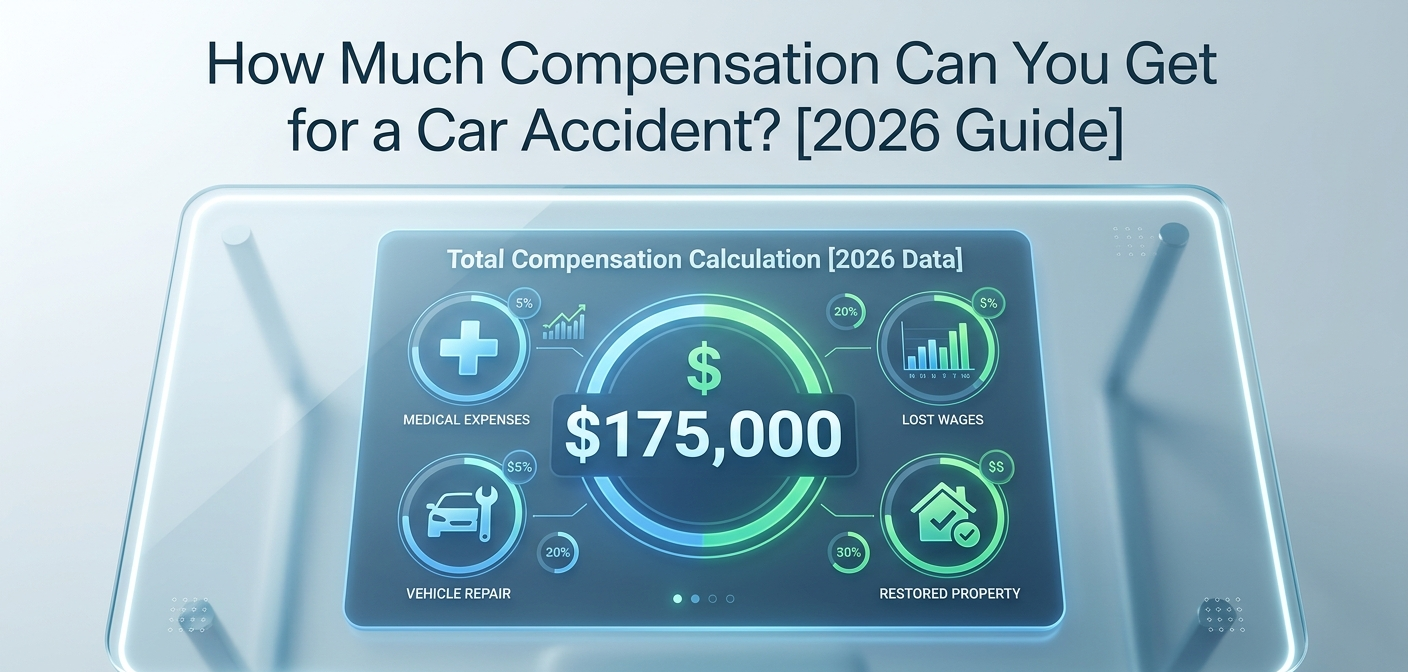
Medical expenses are typically the largest component of economic damages in a car accident claim. This covers every medical cost you have incurred as a direct result of the accident, including emergency room visits and ambulance fees, hospitalization and surgery costs, diagnostic tests such as X-rays, MRI scans, and CT scans, prescription medications, physical therapy and rehabilitation, chiropractic treatment, mental health counseling related to the accident, and the cost of any medical equipment such as crutches, braces, or wheelchairs.
Critically, medical expense compensation is not limited to costs you have already incurred. If your injuries require ongoing or future medical treatment, you are also entitled to compensation for those future medical costs. This is why it is so important not to settle your case before you have reached maximum medical improvement — the point at which your condition has stabilized and your doctors can give a realistic assessment of your future medical needs. Settling too early can leave you without enough money to cover future surgeries, therapy, or long-term care.
Lost Wages
If your injuries prevented you from going to work during your recovery, you are entitled to compensation for every dollar of income you lost as a result. This includes your regular salary or hourly wages, overtime pay you would have earned, bonuses, commissions, self-employment income, and the value of sick days or vacation days you were forced to use because of the accident.
To calculate lost wages, your attorney will typically gather your pay stubs, tax returns, employer statements, and other financial records to establish your pre-accident income and calculate exactly how much you lost during your recovery period.
Loss of Earning Capacity
Loss of earning capacity is a separate and often very significant category of economic damages that applies when your injuries have permanently or long-term affected your ability to work and earn income at the same level as before the accident.
For example, if you were a construction worker who suffered a serious back injury that prevents you from ever returning to physical labor, you may be entitled to compensation not just for the wages you lost during recovery but for the difference between what you would have earned over your entire remaining career and what you are now realistically able to earn given your injury. This can amount to a very substantial sum, particularly for younger victims or those in high-earning professions.
Calculating loss of earning capacity typically requires the testimony of vocational experts and economists who can project your expected future earnings with and without the injury.
Property Damage
Car accident compensation also covers the cost of repairing or replacing your vehicle and any other personal property damaged in the accident. If your car was totaled, you are entitled to its fair market value at the time of the accident — not its replacement cost, but what it was actually worth on the open market immediately before the crash.
Property damage is often handled separately from personal injury claims and may be processed through a different insurance coverage — typically the at-fault driver’s property damage liability coverage or your own collision coverage.
Out-of-Pocket Expenses
Any other expenses you incurred as a direct result of the accident and your injuries are also compensable. This includes transportation costs to and from medical appointments, the cost of hiring help for household tasks you are unable to perform because of your injuries such as cleaning, cooking, or childcare, and any other reasonable expenses directly related to your accident and recovery.
Keep every receipt and record of every expense — no matter how small it may seem. These costs add up and every dollar of documented expense strengthens your claim.
Non-Economic Damages — Compensation for Intangible Losses
Non-economic damages compensate for the very real but harder-to-quantify ways that a car accident affects your life beyond the financial. These losses do not come with a bill or a receipt, but they can be just as significant — and in serious injury cases, far more significant — than economic losses.
Pain and Suffering
Pain and suffering is the most well-known category of non-economic damages and often the largest single component of a car accident settlement. It compensates you for the physical pain you experienced as a direct result of your injuries — both the immediate pain from the accident itself and the ongoing pain you endure during your recovery and beyond.
Calculating pain and suffering compensation is not an exact science. Insurance companies and courts use different methods to arrive at a figure. One common approach is the multiplier method, where your total economic damages are multiplied by a number between 1.5 and 5 — with the multiplier reflecting the severity and duration of your injuries. A more serious, longer-lasting injury warrants a higher multiplier. Another method is the per diem approach, which assigns a daily dollar value to your pain and multiplies it by the number of days you suffered.
Emotional Distress
A serious car accident can cause significant psychological harm in addition to physical injury. Emotional distress damages compensate for the mental and emotional suffering caused by the accident, including anxiety, depression, post-traumatic stress disorder, sleep disorders, fear of driving or riding in vehicles, and other psychological conditions that developed as a result of the accident.
Emotional distress claims are strengthened by documentation from mental health professionals such as therapists and psychiatrists, as well as your own detailed account of how the accident has affected your mental health and daily life.
Loss of Enjoyment of Life
If your injuries have prevented you from participating in activities, hobbies, sports, or other pursuits that you enjoyed before the accident, you may be entitled to compensation for this loss of enjoyment of life. This applies whether you can no longer play golf on weekends, coach your child’s sports team, go hiking, play a musical instrument, or engage in any other activity that was an important part of your life before the accident.
Loss of Consortium
Loss of consortium refers to the impact your injuries have had on your relationship with your spouse or domestic partner. It covers the loss of companionship, affection, support, and intimacy that results from serious injury. In some states, loss of consortium claims can be filed by your spouse as a separate claim alongside your personal injury case.
Disfigurement and Permanent Disability
If the accident left you with permanent scarring, disfigurement, or a lasting physical disability, you are entitled to additional compensation that reflects the lifelong impact of these conditions. Permanent injuries that change your appearance, limit your mobility, or require ongoing accommodation in your daily life represent some of the most significant non-economic losses a person can suffer, and the compensation awarded should reflect that.
Punitive Damages — Punishment for Extreme Negligence
In most car accident cases, punitive damages are not available. Punitive damages are reserved for situations where the defendant’s conduct was not merely negligent but was reckless, malicious, or intentional to an extreme degree.
A drunk driver who was far over the legal limit and had prior DUI convictions may face punitive damages. A driver who was street racing at extremely high speeds through a residential neighborhood may face punitive damages. A commercial trucking company that knowingly allowed a driver with a suspended license to operate a vehicle may face punitive damages.
When punitive damages are awarded, they can be substantial — sometimes several times the amount of compensatory damages. Their purpose is not to compensate the victim but to punish the wrongdoer and send a clear message that such conduct will not be tolerated.
Key Factors That Affect How Much Compensation You Receive
Understanding the categories of compensation is important, but it is equally important to understand the many factors that influence how much you actually receive. Here are the most significant factors that determine the value of a car accident claim:
The severity of your injuries is the single most important factor in determining your compensation. More serious injuries result in higher medical bills, longer recovery periods, greater pain and suffering, and more significant impact on your ability to work and enjoy life. A broken leg that heals completely within a few months will result in a much lower settlement than a traumatic brain injury or spinal cord damage that permanently alters your life.
Whether liability is clear or disputed has a major impact on your settlement value. When the other driver is clearly and entirely at fault — for example they ran a red light and were cited by police — insurance companies have much less room to argue against your claim. When liability is disputed or shared between multiple parties, the calculation becomes more complex.
Your own degree of fault can significantly reduce your compensation in most states. The United States uses different fault rules depending on the state. In pure comparative negligence states, your compensation is reduced by your percentage of fault — so if you were 20% at fault, you receive 20% less. In modified comparative negligence states, you cannot recover any compensation if you were 50% or 51% or more at fault depending on the state. In contributory negligence states — a small minority — any fault on your part can bar you from recovery entirely.
The insurance policy limits of the at-fault driver place a practical ceiling on how much you can recover directly from their insurance company. If the at-fault driver carries only the minimum required liability coverage — which can be as low as $25,000 in some states — and your damages far exceed that amount, collecting the full value of your claim may require pursuing other avenues such as your own underinsured motorist coverage.
The quality and quantity of your evidence directly affects the strength of your claim and your ability to negotiate a favorable settlement. Strong photographic evidence of the accident scene, a clear police report establishing the other driver’s fault, comprehensive medical records, expert testimony, and witness statements all contribute to a stronger claim and a higher settlement.
How promptly you sought medical treatment after the accident significantly affects your claim. Insurance companies closely scrutinize the gap between the accident date and your first medical visit. A delay of even a few days can be used to argue that your injuries were not caused by the accident or were not serious enough to require immediate attention.
Whether you are represented by an experienced personal injury attorney is one of the most significant factors of all. Studies consistently demonstrate that accident victims represented by attorneys receive substantially higher settlements than those who handle claims on their own — even after deducting attorney fees. An experienced attorney knows how to gather and present evidence, calculate the true value of your claim, negotiate effectively with insurance adjusters, and take your case to trial if necessary.
How Insurance Companies Calculate Settlement Offers
Understanding how insurance companies approach settlement calculations helps you recognize when an offer is fair and when it falls far short of what you deserve.
Insurance companies employ claims adjusters whose job is to investigate accident claims and determine how much to pay. These adjusters are not on your side. Their professional goal is to minimize payouts and protect the insurance company’s financial interests.
When evaluating your claim, adjusters will review the police report, your medical records and bills, your employment records to verify lost wages, any photos or videos of the accident and your injuries, and statements from all parties involved. They will also look for anything they can use to reduce your claim — gaps in medical treatment, social media posts that suggest you are less injured than claimed, any indication that you share fault for the accident, and pre-existing medical conditions that they can argue are unrelated to the accident.
Initial settlement offers from insurance companies are almost always significantly lower than the true value of your claim. This is a deliberate negotiation tactic. Insurance companies know that many accident victims are under financial pressure, unfamiliar with the claims process, and eager to resolve the situation quickly. They count on this to get away with paying less than they should.
Never accept the first settlement offer without consulting a personal injury attorney. Once you accept a settlement and sign a release, you permanently waive your right to seek any additional compensation — even if your injuries turn out to be far more serious than initially realized.
What Is the Average Car Accident Settlement?
People frequently ask about average car accident settlement amounts, and while it is understandable to want a benchmark, the truth is that averages can be very misleading when it comes to personal injury claims.
Minor car accident claims involving soft tissue injuries with no lost wages and a quick recovery might settle for a few thousand dollars. Moderate injury cases involving broken bones, significant medical treatment, and several weeks of missed work might settle for anywhere from $20,000 to $75,000 or more. Serious injury cases involving traumatic brain injuries, spinal cord damage, permanent disability, or significant long-term impact on earning capacity can result in settlements or verdicts worth hundreds of thousands or even millions of dollars.
The most accurate assessment of what your specific case is worth can only come from an experienced personal injury attorney who has reviewed the details of your accident, your injuries, your medical records, and all other relevant factors.
How to Maximize Your Car Accident Compensation
There are concrete steps you can take to give yourself the best possible chance of receiving the full compensation you deserve.
Seek medical attention immediately after the accident and follow every treatment recommendation your doctors give you. Do not skip appointments, stop treatment early, or ignore medical advice — these gaps will be used against you.
Document everything from day one. Photographs of the scene and your injuries, witness contact information, a written account of what happened, and daily notes about your pain and recovery all strengthen your claim significantly.
Keep every single document related to your accident and injuries — every bill, every receipt, every piece of correspondence with insurance companies, every medical record. Organization and thoroughness make a measurable difference in the outcome of your claim.
Do not post about your accident or your activities on social media. Even an innocent photo of you smiling at a family gathering can be used by the insurance company to argue that you are not as injured as you claim.
Do not give a recorded statement to the other driver’s insurance company without your attorney present. Their questions are designed to elicit answers that minimize your claim.
Do not accept any settlement offer before consulting a personal injury attorney and before you have a complete understanding of the full extent of your injuries and their long-term impact.
Hire an experienced personal injury attorney as early as possible. An attorney will handle negotiations with the insurance company, accurately calculate every category of damages you are entitled to, gather and preserve evidence, bring in expert witnesses where necessary, and fight for the maximum compensation available under the law.
Conclusion
The amount of compensation you can receive after a car accident depends on many factors — the severity of your injuries, the clarity of liability, the insurance coverage available, and the quality of your evidence and legal representation. But one thing is certain: the full value of a serious car accident claim is almost always significantly higher than what insurance companies offer on their own.
You deserve compensation for every medical bill, every day of missed work, every moment of pain and suffering, and every way this accident has changed your life. Do not let an insurance company tell you otherwise.
If you have been injured in a car accident, consult a personal injury attorney today. Most offer free consultations and work on a contingency fee basis — meaning you pay nothing unless they win your case. Understanding your rights costs you nothing, and the difference between settling on your own and having an experienced attorney in your corner can be the difference between thousands and hundreds of thousands of dollars.
You have one chance to get this right. Make it count.
LEGAL DISCLAIMER
This article is published by TechCourt for informational and educational purposes only. Nothing in this article constitutes legal advice, and no attorney-client relationship is created by reading this content. Car accident compensation laws vary significantly by state and individual circumstances differ. Always consult a licensed personal injury attorney in your jurisdiction before making any decisions about your car accident claim.