
Introduction
Hit-and-run accidents are particularly stressful because the responsible party leaves the scene, leaving victims to face injuries, vehicle damage, and legal challenges on their own. Understanding how to handle hit-and-run accidents legally is critical for protecting your rights, ensuring proper reporting, and securing compensation for your losses. These cases combine personal injury law, traffic regulations, and insurance claims, requiring a careful and systematic approach.
This guide provides a detailed, step-by-step roadmap for legally handling hit-and-run accidents, from immediate actions at the scene to working with law enforcement, insurance companies, and attorneys.
Immediate Actions After a Hit-and-Run
Ensure Safety First
Check for injuries to yourself, passengers, and others involved. Move to a safe location if possible. Avoid chasing the suspect, which can create additional risks.
Call Emergency Services
Dial 911 to report the accident. Emergency responders can provide medical assistance and create official records.
Document the Scene
Even without the other driver, you can collect valuable evidence:
Photographs of vehicle damage
Accident scene and surroundings
Skid marks, debris, or road conditions
License plate fragments or vehicle description
Witness names and contact information
This evidence helps law enforcement identify the suspect and supports insurance claims.
Seek Medical Attention
Prompt medical evaluation is critical, even if injuries appear minor. Some injuries manifest later, and early documentation strengthens your claim.
Report to Law Enforcement
File a police report as soon as possible. Include:
Date, time, and location of the accident
Vehicle description of the fleeing driver
License plate information if available
Statements from witnesses
Police documentation establishes an official record, which is essential for insurance claims and potential criminal charges.
Legal Considerations in Hit-and-Run Cases
Criminal Liability
Hit-and-run drivers face criminal penalties, including fines, license suspension, and imprisonment. Your police report may trigger a criminal investigation.
Civil Liability
The fleeing driver may still be held financially responsible for damages and injuries. Legal action can pursue compensation even if the driver is apprehended later.
Insurance Implications
Uninsured Motorist Coverage
If the at-fault driver cannot be located, uninsured motorist coverage in your auto insurance policy may cover medical bills and vehicle repairs.
Personal Injury Claims
You may pursue compensation for medical expenses, lost wages, pain and suffering, and property damage.
Property Damage Claims
Collision coverage or uninsured motorist property damage coverage may help repair your vehicle when the at-fault driver is unidentified.
Gathering Evidence After a Hit-and-Run
Eyewitness Statements
Witnesses are often the most valuable source of information. Obtain:
Names, phone numbers, and addresses
Descriptions of the fleeing vehicle
Statements about the direction of travel
Video Evidence
Surveillance cameras, dashcams, and traffic cameras can capture the accident and fleeing vehicle, providing critical evidence for law enforcement and insurance claims.
Photographs
Take comprehensive photos of:
Vehicle damage
Accident scene
Road conditions, skid marks, or debris
Your injuries
Medical Records
Document all injuries, treatments, and expenses. Medical records serve as proof of damages for insurance claims or lawsuits.
Legal Steps After Filing a Police Report
Follow up with Law Enforcement
Keep track of your case number and any updates. Cooperate with investigators providing additional details or evidence.
Notify Your Insurance Company
Provide police reports, photographs, witness information, and medical documentation. Be honest but avoid speculation about the other driver.
Consult a Personal Injury Lawyer
An experienced attorney can help:
Evaluate your case
Determine applicable insurance coverage
Negotiate with insurers
Pursue civil action against the at-fault driver if identified
Handling Insurance Claims
Uninsured Motorist Coverage
This coverage can pay for injuries and damages when the responsible driver is unidentified. Provide complete documentation and cooperate with your insurance adjuster.
Collision Coverage
If your policy includes collision coverage, it may help cover vehicle repairs regardless of fault.
Document Every Expense
Maintain detailed records of medical bills, transportation costs, property repairs, and lost wages to maximize your claim.
Filing a Civil Lawsuit
If the hit-and-run driver is identified, you may pursue a civil lawsuit for compensation. Your lawyer can help:
Establish liability
Present evidence of damages
Seek compensation for medical bills, lost income, and pain and suffering
Potential Challenges
Identifying the Driver
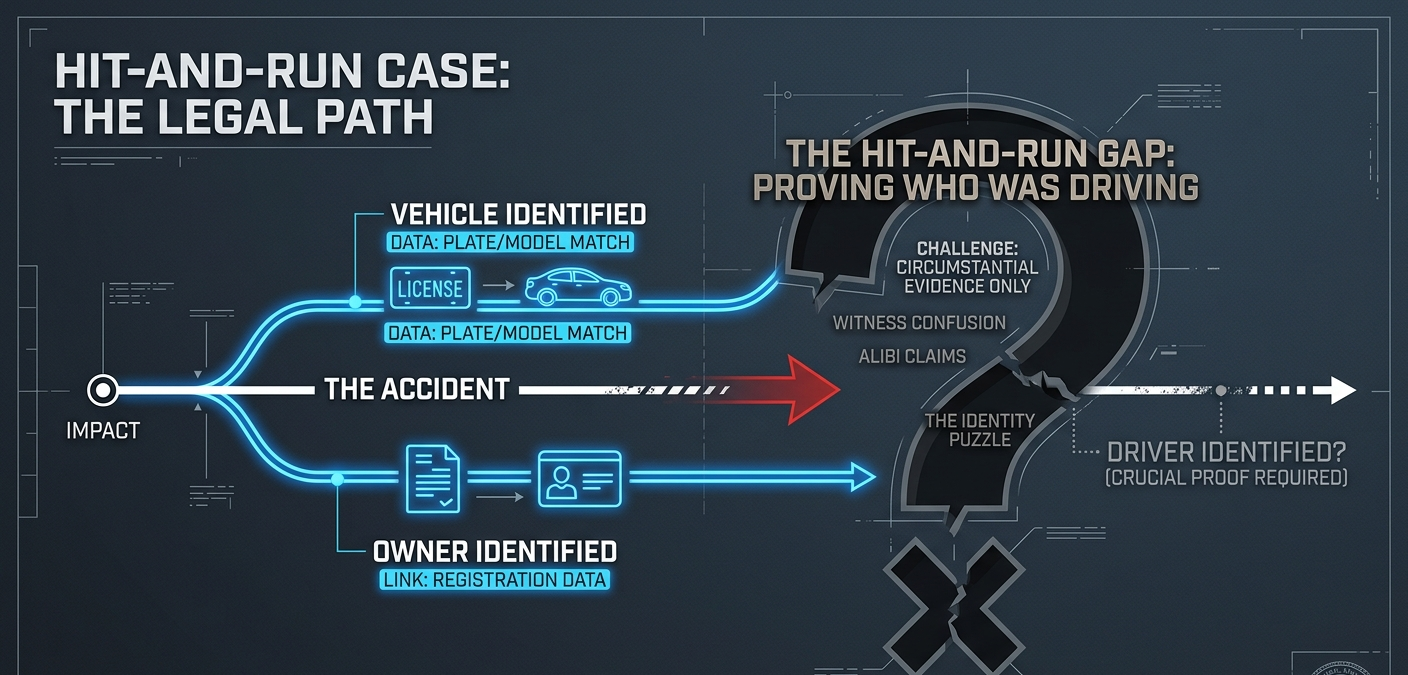
Hit-and-run drivers often evade capture. Evidence from witnesses, cameras, and forensic investigation increases chances of identification.
Insurance Disputes
Insurers may question the validity of your claim or the severity of damages. Comprehensive documentation mitigates these disputes.
Pre-existing Conditions
If your injuries are exacerbated by a pre-existing condition, you may need medical expert testimony to establish causation.
Preventive Measures to Protect Yourself
Install Dashcams
Dashcams can capture accidents in real-time, providing evidence of the incident and the fleeing vehicle.
Be Aware of Surroundings
Parking in well-lit areas and noting nearby surveillance cameras increases chances of capturing the vehicle.
Document Everything
Keep a detailed log of injuries, medical treatments, and expenses to strengthen claims.
Legal Rights and Considerations
Right to Compensation
Victims are entitled to compensation for injuries, property damage, and related expenses, regardless of the driver fleeing.
Right to File a Police Report
Filing a report promptly is legally required in many jurisdictions and essential for insurance claims.
Right to Legal Representation
Consulting an attorney ensures your rights are protected, particularly in complex or disputed claims.
Real-Life Scenario
Imagine a driver hit your parked car and fled:
Victim A: Immediately called 911, documented the scene, collected witness statements, and contacted insurance.
Victim B: Left the scene without reporting, delayed medical care, and failed to document evidence.
Outcome:
Victim A: Receives compensation for vehicle repair, medical bills, and lost wages through insurance and potential recovery from the perpetrator.
Victim B: Struggles to prove damages and receives minimal compensation.
Future Trends in Hit-and-Run Cases
Advanced Surveillance
Increased use of traffic cameras, license plate recognition, and neighborhood monitoring improves hit-and-run investigations.
AI-Assisted Insurance Analysis
AI tools analyze accident patterns, witness reports, and medical records to assess claims and identify responsible parties.
Telemedicine Documentation
Remote medical evaluations allow immediate recording of injuries following accidents, strengthening evidence.
Frequently Asked Questions
Can I pursue compensation if the driver is never found?
Yes. Uninsured motorist coverage or certain state funds may provide compensation.
Do I need a lawyer for a hit-and-run accident?
While not legally required, a personal injury lawyer can maximize compensation, navigate insurance claims, and handle legal complexities.
What if I was partially at fault?
Comparative fault laws may reduce your compensation but do not prevent recovery. Legal counsel helps navigate these scenarios.
Conclusion
Hit-and-run accidents are stressful, but knowing how to handle them legally protects your rights and ensures you are compensated for injuries and damages. Immediate action, documentation, cooperation with law enforcement, and professional legal guidance are critical to success.
Final Thoughts
If you are involved in a hit-and-run accident:
Ensure safety and call emergency services
Document the scene and injuries thoroughly
File a police report promptly
Notify your insurance company
Maintain detailed records of expenses and treatments
Consult a personal injury lawyer
By following these steps, you can navigate the legal complexities of hit-and-run accidents effectively, protect your rights, and maximize compensation. Preparation, documentation, and professional guidance are the keys to handling hit-and-run incidents successfully.
LEGAL DISCLAIMER
This article is published by TechCourt for informational and educational purposes only. Nothing in this article constitutes legal advice, and no attorney-client relationship is created by reading this content. Personal injury laws vary by state and individual circumstances differ significantly. Always consult a licensed personal injury attorney in your jurisdiction before taking any legal action regarding your case.