
Introduction
After an accident, your first instinct might be to cooperate fully with the insurance company. You may believe that being open, honest, and helpful will speed up your claim and ensure fair compensation. Unfortunately, that’s not always how things work.
Insurance companies are businesses. Their primary goal is to protect their bottom line—not to maximize your payout. Every conversation you have with an insurance adjuster is carefully evaluated, recorded, and potentially used to reduce or deny your claim.
What you say—and how you say it—can significantly impact the outcome of your personal injury case.
In this comprehensive guide, we’ll walk you through the 7 most dangerous things you must never say to an insurance company, explain why they can harm your claim, and show you exactly what to say instead.
Why Your Words Matter More Than You Think
Before diving into the list, it’s important to understand why communication with insurance companies is so critical.
When you speak with an adjuster:
Your statements may be recorded
Your words can be taken out of context
Small inconsistencies can be used against you
You may unintentionally weaken your claim
Even a casual or polite comment can be twisted into evidence that reduces your compensation.
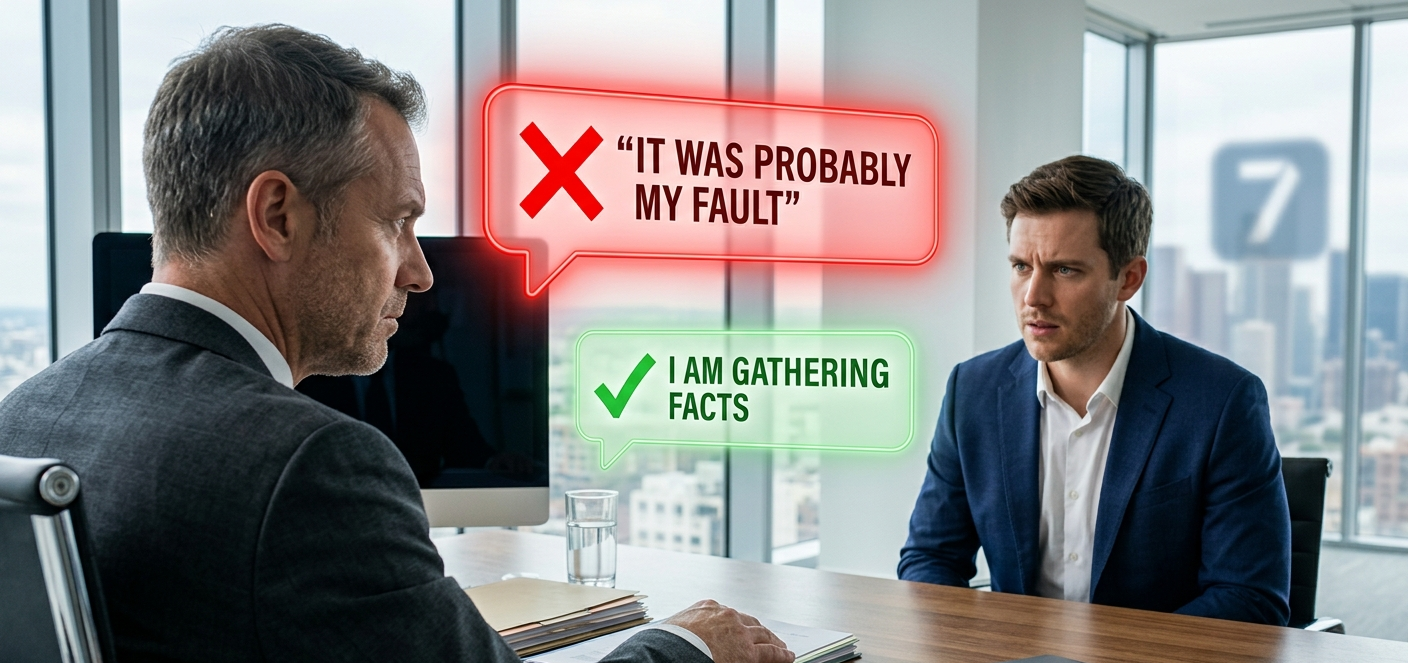
1. “I’m Sorry” or “It Was My Fault”
Why You Should Never Say This
Apologizing might feel like basic human decency, especially after an accident. But in legal terms, saying “I’m sorry” can be interpreted as an admission of fault.
Even if you’re just expressing sympathy, insurance companies may use your statement to argue that you accepted responsibility.
Example:
You say, “I’m sorry, I didn’t see the other car.”
This can be used to suggest negligence—even if the other driver was at fault.
What to Say Instead:
“I’m not sure exactly what happened yet.”
“I’d like to review the details before making any statements.”
2. “I’m Not Injured” or “I Feel Fine”
Why This Is Dangerous
After an accident, adrenaline can mask pain and injuries. Many people initially feel fine, only to experience symptoms hours or days later.
If you tell an insurance company that you’re not injured, they may use that statement to deny future medical claims.
Example:
You later discover a back injury, but your initial statement says you were fine. The insurer may argue that your injury is unrelated to the accident.
What to Say Instead:
“I’m still assessing my condition.”
“I will seek medical evaluation before commenting on injuries.”
3. “It Was Just a Minor Accident”
Why This Hurts Your Claim
Downplaying the accident can severely impact your case. Insurance companies may argue that a minor accident could not have caused serious injuries.
Reality:
Even low-impact accidents can result in significant injuries like whiplash or internal damage.
What to Say Instead:
“The accident details are still being evaluated.”
“I’ll rely on medical professionals to assess the impact.”
4. “Here’s a Recorded Statement”
Why You Should Be Cautious
Insurance adjusters often request recorded statements early in the claims process. While it may seem routine, this can be risky.
Why:
You may not have all the facts yet
You could unintentionally contradict yourself
Your words can be used selectively against you
What to Say Instead:
“I’d prefer to provide a statement after consulting with my attorney.”
You are not legally required to provide a recorded statement immediately.
5. “I Accept Your Offer”
Why This Is a Big Mistake
Insurance companies often make quick settlement offers that are far lower than what your claim is worth.
Accepting too early can mean:
Losing the right to additional compensation
Covering future medical expenses out of pocket
Settling for less than you deserve
What to Say Instead:
“I’d like time to review this offer.”
“I will consider this after consulting with my legal advisor.”
6. “I Don’t Need a Lawyer”
Why This Weakens Your Position
Telling an insurance company that you don’t have or need a lawyer signals that you may not fully understand your rights.
What this means for insurers:
They may offer lower settlements
They may use complex language to confuse you
They may pressure you into quick decisions
What to Say Instead:
“I am considering my legal options.”
Even if you haven’t hired a lawyer yet, keep your options open.
7. “Here’s Access to My Medical Records”
Why You Should Be Careful
Insurance companies may ask for full access to your medical history. This can be a trap.
Risks include:
Misinterpreting past medical conditions
Blaming pre-existing issues for your current injury
Using unrelated records to deny your claim
What to Say Instead:
“I will provide relevant medical documentation through proper channels.”
Always limit what you share to what is necessary and relevant.
The Hidden Strategies Insurance Companies Use
Understanding how insurance companies operate can help you avoid costly mistakes.
Common tactics include:
1. Minimizing Your Claim
They may downplay your injuries or damages.
2. Creating Doubt
They look for inconsistencies in your statements.
3. Delaying the Process
Delays can pressure you into accepting a lower settlement.
4. Using Your Words Against You
Every conversation is an opportunity for them to gather evidence.
Real-Life Scenario
Imagine this:
You’re involved in a car accident. When the insurance adjuster calls, you say:
“I’m sorry, I didn’t see them.”
“I feel okay, it wasn’t that bad.”
Weeks later, you’re diagnosed with a serious neck injury.
Outcome:
Your apology is used as an admission of fault
Your statement about feeling fine is used to deny your injury claim
Your compensation is significantly reduced
This is how small mistakes can lead to big consequences.
What You SHOULD Do When Dealing with Insurance Companies
Now that you know what not to say, let’s focus on best practices.
1. Stay Calm and Professional
Keep your communication clear, polite, and minimal.
2. Stick to Basic Facts
Only provide necessary information such as:
Your name
Date and location of the accident
Avoid giving opinions or assumptions.
3. Document Everything
Keep records of:
Conversations
Emails
Medical reports
Expenses
4. Avoid Speculation
If you’re unsure about something, say so.
5. Seek Legal Advice
Consulting a personal injury lawyer can significantly improve your chances of fair compensation.
The Psychology Behind Insurance Conversations
Insurance adjusters are trained professionals. They know how to:
Build rapport quickly
Ask leading questions
Encourage you to talk more than necessary
This can create a false sense of trust.
Remember: they are not your ally.
The Cost of Saying the Wrong Thing
A single statement can:
Reduce your settlement
Delay your claim
Damage your credibility
Lead to claim denial
In some cases, it can cost you thousands—or even your entire case.
Future Trends: AI and Insurance Claims
As technology evolves, insurance companies are increasingly using AI to analyze claims.
This includes:
Voice analysis during calls
Pattern recognition in statements
Automated risk assessment
This makes it even more important to choose your words carefully.
Frequently Asked Questions
Can I refuse to speak to an insurance adjuster?
Yes. You have the right to limit communication or direct them to your lawyer.
Should I record my conversations?
If legally allowed in your area, this can be helpful for documentation.
What if I already said something wrong?
Don’t panic. Consult a lawyer immediately to minimize the damage.
Conclusion
Dealing with an insurance company after an accident can be overwhelming, but what you say during this process can make or break your case.
Avoiding these 7 critical mistakes can protect your rights, strengthen your claim, and help you secure the compensation you deserve.
Remember:
Think before you speak
Keep your statements minimal
Never rush into decisions
Final Thoughts
Insurance companies handle thousands of claims every year—they know exactly what to look for and how to use it to their advantage.
But now, so do you.
By understanding what not to say and how to respond strategically, you put yourself in a much stronger position. In personal injury cases, knowledge isn’t just power—it’s protection.
Stay informed, stay cautious, and most importantly, protect your claim.
LEGAL DISCLAIMER
This article is published by TechCourt for informational and educational purposes only. Nothing in this article constitutes legal advice, and no attorney-client relationship is created by reading this content. Personal injury laws vary by state and individual circumstances differ significantly. Always consult a licensed personal injury attorney in your jurisdiction before taking any legal action regarding your case.